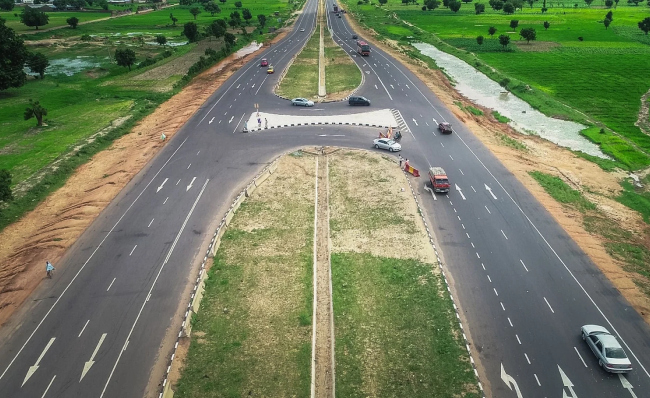
The Abuja-Kaduna-Zaria-Kano Dual Carriageway is among Nigeria’s most significant road infrastructure projects. Stretching over 375 kilometres from the Federal Capital Territory (FCT) in Abuja through northern commercial hubs like Kaduna, Zaria, and Kano, this corridor plays a critical role as a major inter-regional economic artery — supporting trade, agriculture, mobility, and national integration.
Historically, this road has suffered from wear, deterioration, inadequate maintenance, and bottlenecks. Prior rehabilitation attempts began under previous administrations, but slow progress and financial constraints delayed meaningful transformation. Under President Bola Tinubu’s Renewed Hope Agenda, the project has gained renewed political prioritization and re-scoping, with accelerated timelines and revised execution strategies designed to meet Nigeria’s growing transport demands.
The Road Defined: Route and Structure
The dual carriageway project encompasses three major sections:
- Abuja to Kaduna – Serving as the southern entry point to the northern economy.
- Kaduna to Zaria – Cutting through key commercial and industrial communities.
- Zaria to Kano – Connecting major northern urban clusters and gateway markets.
Altogether, these sections form a continuous high-capacity highway that enhances north-south connectivity — connecting millions of Nigerians, facilitating intra-regional trade, and linking hinterland production zones with domestic and overseas markets. The road lies on Nigeria’s A2 highway corridor, which is also important for trans-African transport linkages.
Before recent restructuring, the highway project was awarded in 2017 to Messrs Julius Berger (Nig.) Plc at a contract value of N155.7 billion with a 36-month completion timeline. However, delays and cost escalations led to reassessments and renewed government strategies to accelerate execution.
Technical Re-Design and Construction
Concrete Pavement Adoption
In November 2024, President Tinubu approved redesigning 127 km of the remaining Abuja-Kaduna Section using Continuously Reinforced Concrete Pavement (CRCP) instead of traditional asphalt. Concrete was selected for greater durability, longer lifecycle, reduced maintenance frequency, and enhanced load-bearing capacity — critical for heavy commercial traffic along this corridor.